
Six Out of Four Hundred: I Found a Doctor Who Sees Me by Gracie Nicole Berry

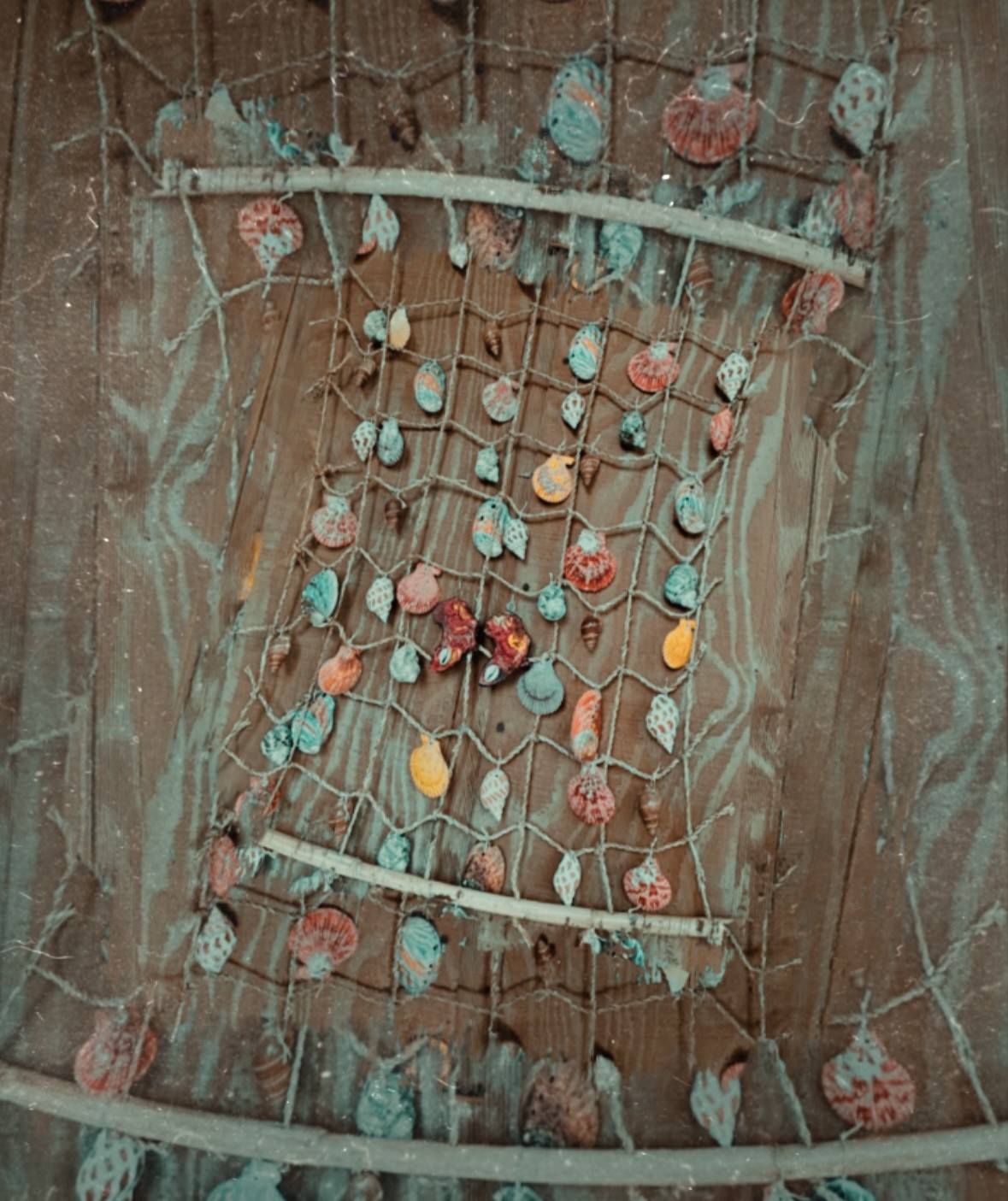
Just an image I captured at home that reminds me of that moment.

I’ll admit, when my coworker first introduced me to ChatGPT, I didn’t think much of it. I figured it was just another tech tool that probably wouldn’t be all that useful in my day-to-day life.

But I decided to test it out anyway. I uploaded a picture of my primary care physician list — over 400 names — and asked ChatGPT some very specific questions about ethics, humanity, gender, and overall safety in medical practice. As a woman of Afrikan descent, I’ve had my share of abrasive and, at times, outright racist experiences in healthcare. So this search wasn’t just about convenience; it was about trust, dignity, and finding someone who would actually see me.

To my surprise (and a little concern), out of more than 400 providers, only six met the criteria I was looking for. Six. You’d think things like empathy, integrity, and inclusivity would be universal — but they clearly aren’t. And to make matters worse, five of those six either weren’t accepting new patients or had wait times stretching into February 2026. Yikes.

Still, I had one name left — and I’m so glad I followed through.

My new doctor was born in America to Indian parents. From the moment she walked into the room, there was an ease about her — an openness that felt rare. She greeted me with genuine warmth and said, “I’m so happy to be your doctor.” Throughout the appointment, she was kind, attentive, and present in a way that made me feel completely at ease.

Then came a moment that made me laugh and love her even more. In the middle of our chat, she suddenly stopped, chuckled, and said, “Oh my gosh, I think I might have something in my nose!” She laughed as she reached for a tissue, saying, “I normally wouldn’t say that to a patient, but I feel like I can say that to you.” I told her, “Oh, I totally would tell you!” When she came back from washing her hands, I looked her in the nose and said, “All clear — nothing there.” Her smile lit up the room.

She also apologized at one point for wearing her gardening tennis shoes. She told me she’d gotten dressed for the day, went out to tidy up her garden, and completely forgot to change shoes before heading in. We both laughed — it just made her even more real.

That small collection of moments — laughter, honesty, comfort — reminded me what healthcare should feel like. Human. Down-to-earth. Safe. There was something quietly beautiful about our connection — two women of color, from different cultures, sharing a simple, authentic moment in a space that so often feels sterile and guarded.

I can’t say I’ll use ChatGPT for much else, but for this — for helping me find a doctor who respects and understands me — it was invaluable. What started as a test turned into something deeply meaningful.

Sometimes, technology gets it right — not by replacing humanity, but by helping us find it.

Ase’O

TheeAmazingGrace
Hate with Purpose, Heal with Power: Let Hate Clarify Without Being Consumed by It by Gracie Nicole Berry

Lately, I’ve been on an emotional roller coaster. After finally requesting my childhood ward of the court records—records that have existed since I was five years old—I’ve been revisiting parts of my life with a different lens. I’m in a place now—after so much intentional healing—where I’m genuinely curious. I feel healthy in my pursuit and believe that knowing this information will only further my healing journey, my art, and the legacy I wish to be remembered for.

I remember bits and pieces, but trauma has a way of scattering time. These records, I trust, will help put into place the dates, the times, and the situations that have lived in my memory without order or clarity for years. The Department of Human Services (DHS) in Philadelphia gave me a difficult time over the last few years. They made my right to know—to access to my own history—feel like a battlefield. But recently, I found out I’ll finally be assigned a lawyer—someone who can help me get the information I’ve been asking for all along.

And what changed everything?
They finally learned my mother’s name and date of birth—information they hadn’t asked for before. That one detail opened doors I’d been knocking on for years. It’s been emotional—and it’s also brought me some resolution. It made me think of this:

Just because we grew up impoverished don’t mean our minds ever were. Many of us saw so much too soon—or things we should’ve never been exposed to—yet we’ve carried the power to cultivate both the elevation of our existence and the orchestration of our own demise.

Crack cocaine stole my matriarch, just like I know it stole so many other lives. And that devastation wasn’t by chance. Reagan’s “War on Drugs” wasn’t a war on drugs at all—it was a war fueled by his hatred for Black people and poor neighborhoods like mine.

Thank you, Mama Nikki Giovanni, for giving us permission to: hate who we hate, and love who we love—and let it be known so. I want to be clear—my hatred for him, and the whole system that granted him permission to destroy us, is intentional. The hate I feel for him and his cohorts doesn’t come from a place of bitterness—because the creator made it possible for me to be a never-ending healing vessel and if I have it my way, I will continue to choose to be. 

And I still hate him—on purpose—because I lived through the hatred and witnessed how he tried to slaughter us.

Policies that punished addiction instead of protecting the ones suffering from it. Foreign operations that opened the doors right into our bedrooms, flooding us out into the streets. Laws that criminalized our communities instead of healing them. Many of us who rise today from those same barbaric ashes are here because we know what it is to not just survive, but to live—and to tell our stories—in the face of real-life horror.

As I grow into my mature age, I’ve learned to genuinely not give a damn about what anyone thinks of me—or how I move through this life. I move with integrity in every interaction, as much as being human allows. Many moons ago, I learned hard lessons. I stopped being a bleeding heart, stopped bending to please others, especially when it meant dimming myself just to make them feel seen—more seen than they ever tried to make me feel.

I’m grateful I no longer concern myself with someone else’s skin, or how they choose to move in it. I’m rooted in my own.

My deepest wish for anyone reading this is that you find the strength to go into any space with your head held high—calm, unbothered, having a drink or a bite to eat, or simply reading a book and breathing without a single care about who’s watching or whispering.

Move with integrity. Carry the voices of your ancestors with you. Let them echo in every room you enter. Stop—if you can help it—from dimming your light just to make others feel seen. Because the truth is, no one can break you—not in this life. Even when they play in your face. Even when they think they’ve got you all the way fucked up.

They don’t.
And they never will.

Shit! The day I break is the day I die—the day my body exits the planet. And even then, I’ll be more whole than ever before—an ancestor, returned to source.

To my mother,
and the ancestors who move about with me—thank you for clearing paths I couldn’t see, for loving me beyond the veil,
and for sending the healing exactly when I was ready to receive it.

Mommy, I hear you in every moment of clarity. That sweet, raspy, deep voice of yours still wraps around me. Your lullaby still sings:
I can see clearly now, the rain is gone…

This is our story, too.

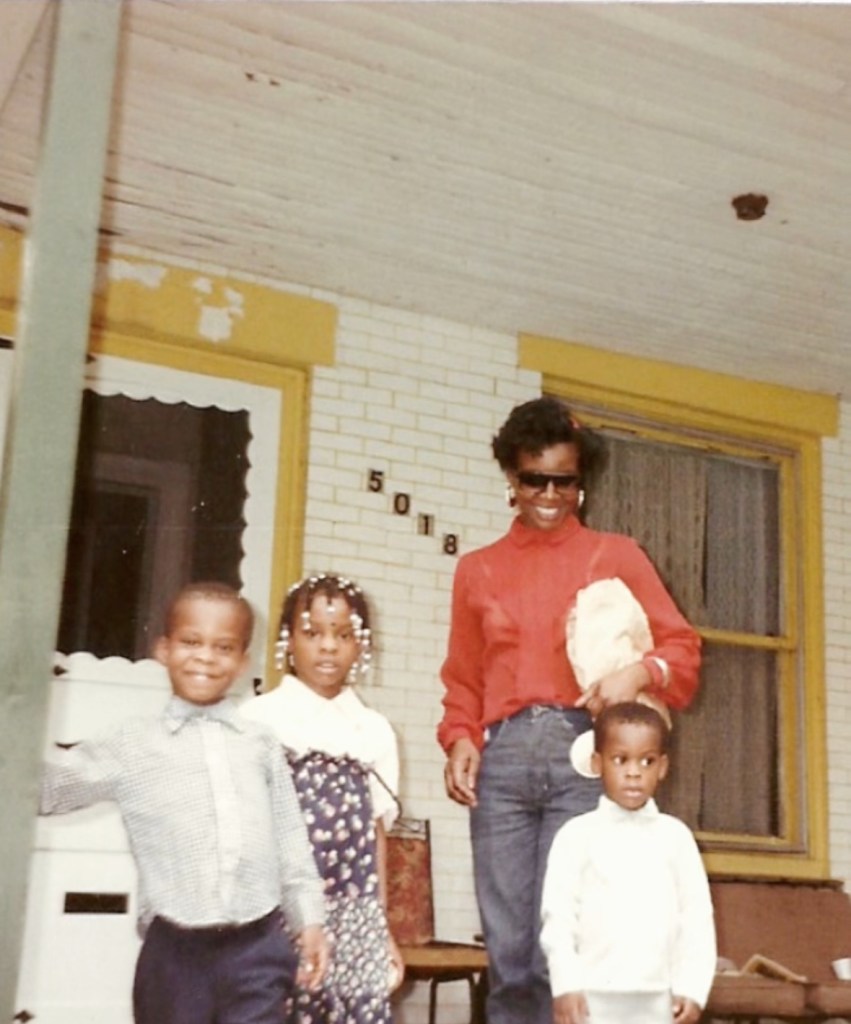
My mom, me, David, and Jeremiah at Grema Tussie house on Hazel Ave in Philadelphia, Pennsylvania, circa 1986.

Ase’O 

TheeAmazingGrace